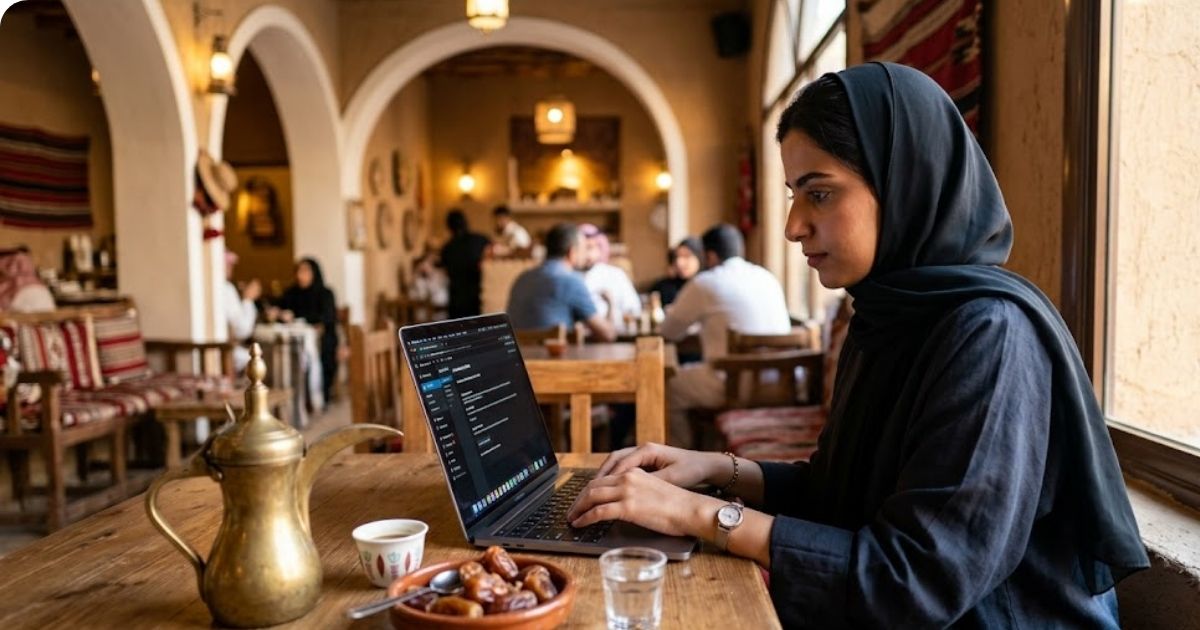
WordPress powers an estimated 43% of the web, but its fit for Saudi businesses depends heavily on what you're building. For content-driven sites, portfolios, and content-heavy professional services, WordPress remains the most flexible and cost-effective platform. For ecommerce, the calculus shifts toward Saudi-built alternatives. This guide is the honest breakdown — when WordPress is the right choice for Saudi businesses, when it's not, and what the realistic implementation looks like in 2026.
By RankRush Team ·
WordPress has evolved substantially in the last 3 years in ways that matter for Saudi implementations:
The shorthand: WordPress in 2026 is faster, more secure, more user-friendly, and more flexible than WordPress in 2020. The decision criteria for "should I use WordPress" need updating from outdated assumptions.
Specific scenarios where WordPress consistently wins for Saudi implementations:
Equally important — the scenarios where WordPress costs more than it saves:
The technical configuration for production WordPress sites serving Saudi audiences:
The right hosting depends on traffic patterns, technical capability, and performance requirements. Most Saudi business WordPress sites benefit from international managed hosting (WP Engine/Kinsta) plus Cloudflare with Saudi POPs for the CDN layer.
Saudi WordPress Hosting Options
Host Type Performance Saudi POPs Cost (mid-size site) Best For International managed (WP Engine/Kinsta) Excellent No (closest UAE/EU) "USD 200-500/month" Standard Saudi sites with global audience Regional managed (UAE/GCC providers) Good Some "USD 80-250/month" Saudi-primary with GCC traffic Cloudways (multi-cloud) Excellent UAE option "USD 100-300/month" Performance-focused Saudi sites Local Saudi hosting Variable Yes "USD 30-100/month" Saudi-only audience priority VPS self-managed Excellent (if configured) Configurable "USD 50-200/month" Technical teams comfortable with ops
Essential WordPress configuration for Saudi sites:
Theme selection:
For Saudi sites, the realistic theme options:
For most Saudi business sites, starting with a lightweight starter theme (Astra, GeneratePress) and customizing it produces better performance than starting with a heavy multipurpose theme.
WooCommerce is WordPress's ecommerce solution. Saudi WooCommerce implementations work in specific scenarios but require substantial setup:
Where WooCommerce works for Saudi:
Where WooCommerce struggles vs Saudi-built alternatives:
Realistic WooCommerce Saudi setup cost:
For a mid-size Saudi WooCommerce store with all the necessary Saudi-specific features:
Compare to Salla Pro at 1,099 SAR/month all-in (~13K SAR/year). The break-even is rarely worth it for pure Saudi ecommerce unless you have specific customization needs.
WordPress handles RTL languages reasonably well but requires attention:
The right choice depends on workflow preferences and complexity. For most Saudi sites with structured Arabic-English bilingual setup, WPML is the safer choice; for simpler sites, Polylang is more cost-effective.
For Saudi businesses choosing between WordPress and alternatives, the decision criteria:
Choose WordPress when:
Choose Salla or Zid when:
Choose Shopify when:
Choose custom-built (Next.js, Laravel, etc.) when:
For Saudi businesses needing help choosing platforms or implementing WordPress sites, our [web design services](/services/web-design/) cover platform consultation, WordPress builds, and migrations between platforms. We work with WordPress, Salla, Zid, and Shopify based on what fits each client's situation.
More from our Web Design writing.
Read article →More from our Web Design writing.
Read article →More from our Web Design writing.
Read article →Start with a strategy call. We'll cover scope and pricing.
Message us on WhatsAppYes, with proper configuration. Modern WordPress with managed hosting, security plugins (Wordfence/Sucuri), keeping plugins updated, and following security best practices is secure for business use. The vulnerabilities WordPress has historically had typically come from outdated plugins or themes, not core WordPress. For sensitive sites (healthcare, financial services, government), consider managed hosting with security SLAs rather than self-hosting. Saudi PDPL (Personal Data Protection Law) compliance is the bigger concern than WordPress-specific security for most business sites.
Highly variable based on scope. A simple corporate WordPress site (5-10 pages, basic functionality) typically takes 4-6 weeks. A medium complexity site (20-50 pages, custom features, bilingual) takes 8-14 weeks. A complex site (custom theme, integrations, ecommerce, multi-language with full translation) takes 16-24 weeks. Add 2-4 weeks for content production if not provided. Most Saudi business WordPress projects come in 60-180K SAR depending on complexity.
For new sites in 2026, the native block editor (Gutenberg) is increasingly the better choice. It's faster, has better performance, integrates better with WordPress core, and the gap with page builder capability has narrowed substantially. Page builders still have their use cases (existing sites built with them, teams trained on specific builders, specific design needs the builder handles well). For new builds, block editor + a quality block theme typically delivers better long-term outcomes than committing to Elementor or Divi.
Webflow is growing in popularity for design-led businesses. Pros: visual design freedom, excellent CMS for portfolio/content sites, fast performance. Cons: more expensive for content-heavy sites (CMS limitations on item counts in cheaper plans), less mature ecosystem than WordPress, fewer Saudi-specific resources. For design-led sites with limited content volume, Webflow is a credible alternative. For content-heavy sites, WordPress usually wins on cost-effectiveness. For ecommerce, both lose to Salla/Zid/Shopify for Saudi-specific needs.
Yes — that's one of WordPress's primary advantages over custom-built solutions. With proper setup (good theme, well-documented content blocks, appropriate user roles), Saudi marketing teams can manage day-to-day content (blog posts, page updates, image changes) without developer involvement. Technical changes (plugin updates, theme modifications, security work) typically need developer or agency support. For typical content marketing teams, 80-90% of regular work is doable in-house once trained.