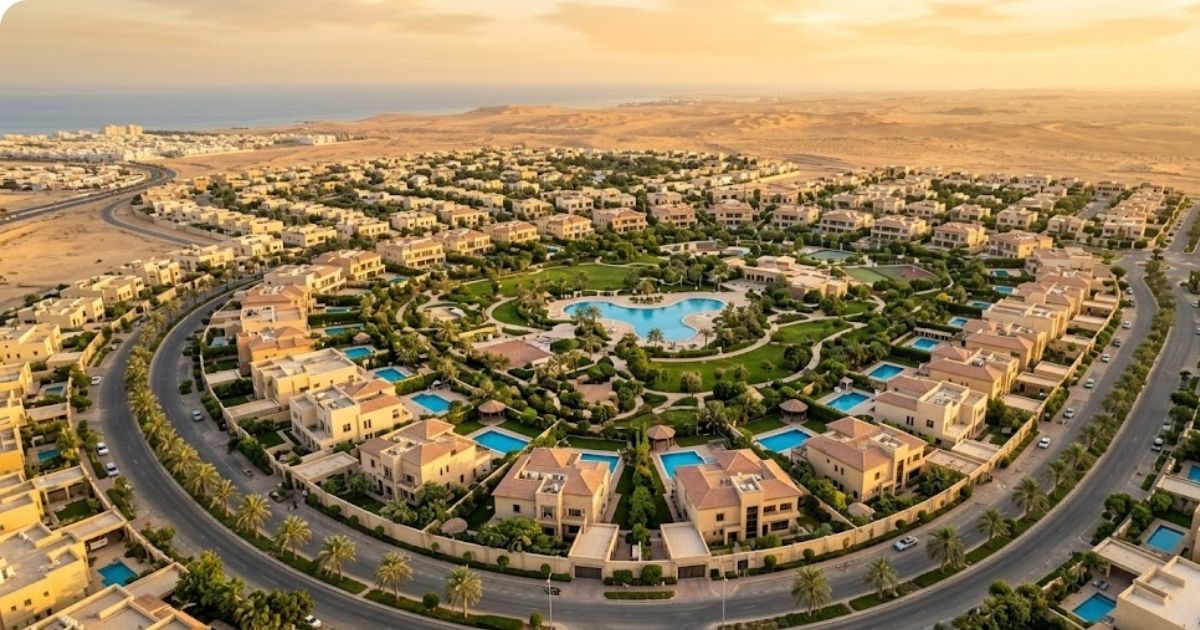
Drone photography transformed Saudi real estate marketing — aerial views of villas, communities, and developments that were impossible to capture five years ago are now standard. But the Saudi regulatory environment around drones is more strict than most markets. GCAM (General Authority of Civil Aviation) permits, no-fly zones around mosques and government sites, and specific licensing for commercial drone operation make this a regulated activity. This guide covers what actually works in 2026: permits, equipment, pricing, and what drives results for Saudi real estate marketing.
By RankRush Team ·
Saudi real estate has structural characteristics that make drone photography unusually impactful:
Saudi Arabia regulates drone operations more strictly than most markets. The current regulatory framework:
Permit application process:
1. Apply through GCAM's online portal with shoot details (location, dates, drone specs, pilot license, insurance) 2. GCAM review typically 14-30 days for standard permits, longer for sensitive locations 3. Approval with conditions specifying allowed altitude, time windows, and other restrictions 4. Permit must be carried during flight and presented if requested by authorities
Cost: SAR 800-2,500 per permit for typical real estate photography shoots.
No-fly zones (NFZ) in Saudi Arabia:
Substantial areas are no-fly zones requiring special permits or being completely closed:
For real estate photography, the practical implications:
Recent regulatory updates:
Saudi drone regulations have evolved 2022-2026 with significant updates. The current framework is more permissive than 2020 but still substantially stricter than markets like UAE or international norms. Stay updated via GCAM official communications; older articles online may have outdated information.
The equipment tiers that work for Saudi real estate work:
The standard tier (DJI Air 3) handles 80% of typical Saudi real estate photography needs. The professional tier adds capability for premium properties. Cinema-tier and custom rigs reserved for major commercial work where production value justifies the cost.
Drone Equipment Tiers for Saudi Real Estate Photography
Tier Drone Model Capabilities Best For Equipment Cost Entry DJI Mini 4 Pro 4K video / 48MP photos / good in light wind Small residential listings SAR 4 500 Standard DJI Air 3 4K video / better low light / longer battery Most residential properties SAR 9 500 Professional DJI Mavic 3 Pro 5.1K video / 1-inch sensor / 4 lenses Premium residential mid-tier commercial SAR 12 500 Cinema DJI Inspire 3 Full-frame / 8K capability / interchangeable lenses Premium commercial brand campaigns SAR 65 000 Custom Freefly Alta X with cinema camera Variable cinema cameras / heavy lift Major commercial / giga-project work SAR 200 000+
Beyond the drone itself:
Climate considerations for Saudi drone operation:
What clients pay for drone photography services in Saudi:
Project-based pricing for typical real estate work:
Day rate alternative:
Many drone operators price by day rate:
Day rates typically include drone, operator, basic editing. Additional costs: GCAM permits, travel/accommodation for remote locations, advanced post-production, additional crew.
Cost components in detail:
Premium add-ons:
The shots that consistently deliver value for Saudi real estate marketing:
For residential properties:
1. Establishing aerial shot showing property within its neighborhood context (high altitude, wide angle) 2. Property orbit at medium altitude showing all sides of the property in a smooth rotation 3. Top-down property view showing footprint and roof condition (technical but valuable for buyers) 4. Pool and outdoor amenities highlighted from above 5. Approach views showing entry and street context 6. Garden and landscape from elevated angles showing yard space and amenities 7. Neighborhood context showing distance to landmarks (mosque, school, shopping) 8. Sunrise or sunset golden hour establishing shots for premium positioning
For commercial properties:
1. Property establishing shot showing building in context 2. Building exterior 360-degree orbit showing all facades 3. Roof access points and conditions (for industrial/office) 4. Parking and access layout from above 5. Surrounding infrastructure showing major road access 6. Adjacent businesses or developments for context
For developments and master-planned communities:
1. Master plan overhead view showing entire development layout 2. Phase-by-phase coverage if applicable 3. Amenity highlights (pools, parks, community facilities) 4. Key infrastructure (entrance gates, central facilities) 5. Surrounding context (highway access, nearby destinations) 6. Time-of-day variations for different perspectives
For giga-projects:
Much more elaborate shot lists involving multi-day shoots, scripted sequences, narrative-driven coverage. These typically operate as full film productions rather than standard drone photography.
Post-production deliverables:
Standard package usually includes:
Patterns we see in Saudi drone real estate work:
The build-vs-buy decision for Saudi real estate brokerages:
Hire external drone photographers when:
Build in-house capability when:
For most Saudi real estate brokerages: hybrid approach. Use external drone photographers for premium listings and occasional needs. Develop basic in-house capability (one licensed operator with standard equipment) for routine listings.
For developers and giga-project marketers: typically hire specialized agencies. The production complexity, scale of work, and creative requirements justify agency relationships rather than in-house development.
For Saudi real estate brands needing drone photography services, our [video production services](/services/video-photography/video-production/) include GCAM-licensed drone operators, full production capability from single-property shoots through major development campaigns.
More from our Video & Photography writing.
Read article →More from our Video & Photography writing.
Read article →More from our Video & Photography writing.
Read article →Start with a strategy call. We'll cover scope and pricing.
Message us on WhatsAppFor purely recreational use of small drones (under 250g typically), reduced permitting applies. But commercial use — including using drone footage in marketing your own properties — falls under commercial drone regulations requiring proper licensing and permits. Self-use exemption doesn't apply if footage is used to market property for sale. When in doubt, get the permit; consequences for illegal flights are substantial.
Standard permits in non-sensitive zones: 14-30 days. Permits near sensitive areas (Mecca, Medina, near airports, near government facilities): 30-60+ days. Rejected applications can require resubmission, adding weeks. For time-sensitive work, apply 6-8 weeks ahead. Some agencies maintain ongoing permit applications for common locations, reducing per-shoot wait times.
For mid-to-premium residential properties (over SAR 1.5M list price), drone photography typically pays back 5-10x its cost through faster sales and stronger pricing power. For lower-priced residential (under SAR 800K), the cost-benefit ratio is tighter but still positive for premium-positioned properties. For luxury properties (over SAR 5M), drone photography is essentially required to compete; properties without drone marketing struggle against properties with it.
Yes, substantially. Drone footage performs strongly on Saudi social platforms — both vertical short-form (TikTok, Snap, Reels) and horizontal long-form (YouTube). The aerial perspective is unusual enough to drive engagement, and Saudi real estate audiences specifically respond to property aerial views. Plan post-production to deliver both horizontal (for YouTube, websites) and vertical (for TikTok, Snap, Reels) versions to maximize platform reach.
For routine Saudi real estate work, Saudi-based GCAM-licensed operators are typically the right choice — they understand permit processes, know local restrictions, and operate at competitive rates. International operators can be valuable for major commercial productions where specific creative capabilities matter, but they need to either coordinate with local licensed operators or qualify under Saudi regulations themselves. Pure-international operations attempting Saudi work without local infrastructure typically face delays and complications.