The shorthand: what Vision 2030 actually changed

At its highest level, Vision 2030 is Saudi Arabia's plan to diversify the economy away from oil dependency by 2030. Six concrete shifts matter most for marketers:

01
The Public Investment Fund (PIF) became one of the world's largest sovereign wealth funds
Deploying capital into Saudi consumer-facing businesses, infrastructure, and giga-projects. The downstream effect: dozens of new domestic consumer brands launched with substantial marketing budgets, plus international brands rushing to capture Saudi market share before competitors locked it up.
02
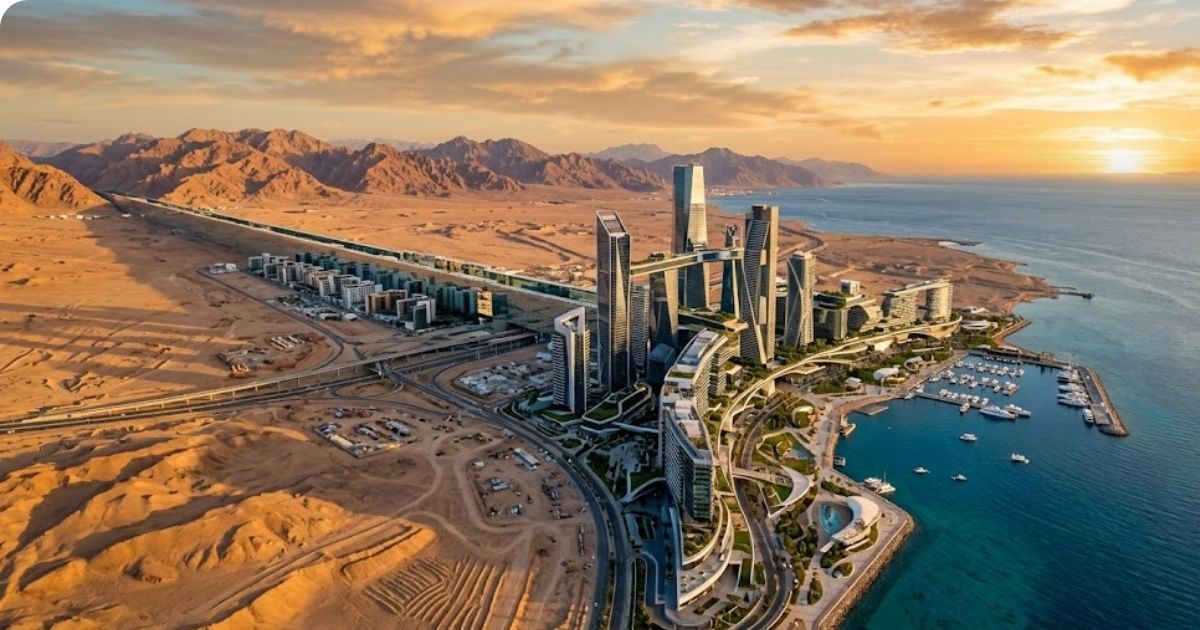
The giga-projects (NEOM, Diriyah, Red Sea Global, AlUla, Qiddiya, ROSHN)
Created entire new categories of consumer experiences and B2B procurement opportunities. Each project has standalone marketing operations and brand presence rivaling national brands.
03
Saudi opened to international tourism for the first time
In 2019. The result by 2026: 30M+ international visitors annually, transforming hospitality, retail, F&B, and entertainment marketing requirements.
04
The Saudization workforce policy (Nitaqat)
Intensified, pushing companies to hire and brand-market to Saudi nationals specifically. This shifted recruitment marketing, employer branding, and consumer-facing diversity messaging significantly.
05
ZATCA, SDAIA, and Monsha'at
Emerged as regulatory institutions that now substantially affect digital operations — e-invoicing requirements, AI development frameworks, and SME support infrastructure respectively.
06
The social liberalization shifts (driving for women in 2018, entertainment sector opening, Saudi-led creative industries)
Opened categories that had been closed for decades. Marketing in cosmetics, fashion, entertainment, hospitality, gaming, music, and content production all transformed in 2018-2024 from minimal-allowed-activity to full-spectrum modern marketing.

The combined effect: the Saudi consumer market in 2026 is unrecognizable compared to 2016, and the regulatory and institutional landscape that marketers operate within is fundamentally different.

The institutions every marketer must understand

Vision 2030 created or empowered several agencies whose decisions now shape what's possible (and what's required) in Saudi digital marketing. Brief reference:

Key Saudi Regulatory Institutions for Marketers

AgencyRoleWhat It Affects for Marketers
ZATCAZakat Tax and Customs Authority"E-invoicing complianceVAT (15%)import duties on advertising production"
SDAIASaudi Data and AI Authority"AI tool usage in marketingdata residencycustomer data handling"
Monsha'atSME General Authority"SME-targeted programsbusiness directoriesfounder marketing channels"
MISAMinistry of Investment"Foreign investor brandingmarket entry supportagency-of-record licensing"
CITCCommunications and IT Commission"Telecom + advertising regulation.sa domain governance"
GAMRGeneral Authority for Media Regulation"Influencer licensingcontent regulationad approval for certain categories"
MaroofSaudi consumer commerce platform"Required for ecommerce operationsdisplays trust signals"
SDBSocial Development Bank"SME loansmarketing support programs"

The agencies above are the ones most likely to come up in normal day-to-day Saudi digital marketing work. Each has clear scope; understand which one's policy applies before assuming a question has a global answer.

The two that most marketers don't realize matter until they hit them:

01
GAMR licensing for influencers
Any Saudi-based influencer making commercial content needs a GAMR license. Brands paying unlicensed influencers can face penalties. Influencer marketing platforms in KSA now verify licensing as part of onboarding; verify yourself before contracting.
02
Maroof for ecommerce trust
Saudi consumer ecommerce sites are essentially expected to display the Maroof trust seal. Sites without it convert measurably worse — Saudi buyers actively look for the seal as a trust signal. Registration is straightforward but requires Saudi commercial registration.

Sector-by-sector marketing implications

Vision 2030's effect varies dramatically by sector. The categories most reshaped, ranked by marketing-impact magnitude:

The sectors where Vision 2030 created the biggest marketing transformations:

01
Entertainment (5/5 across the board)
Saudi entertainment was essentially closed pre-2017. By 2026, it's a multi-billion-SAR sector with concerts, festivals (Riyadh Season, MDLBEAST Soundstorm), cinema chains, and theme parks. Every dimension of marketing — regulatory framework, audience behavior, competitive set, channel mix, agency talent — is brand new.
02
Real Estate (avg 4.2/5)
Mortgage reform, foreign ownership reform, mega-development launches (ROSHN), and changed housing demographics make real estate marketing in 2026 unrecognizable. New ad platforms (Wafi, Aqar, Bayut, Property Finder) emerged or transformed; buyer journey shortened dramatically.
03
Tourism & Hospitality (avg 4.6/5)
From closed market to 30M+ international visitors. Every hotel, restaurant, and visitor-facing business needs international-tourist marketing infrastructure (multilingual sites, GBP optimization, international booking platforms, English-language content) that didn't exist before.

The sectors least transformed by Vision 2030 marketing-wise are typically industrial / B2B sectors with stable supply chains and government buyers — manufacturing, oilfield services, heavy construction. Important sectors but operating in less-changed marketing environments.

The Saudization angle marketers underestimate

Saudization (Nitaqat) is a regulatory framework requiring private-sector companies to employ minimum percentages of Saudi nationals, with quotas that vary by sector and company size. Marketing implications are substantial but easy to miss:

01
Recruitment marketing became a category
Companies under Saudization pressure need to attract Saudi national talent, often competing with PIF portfolio companies offering top compensation. Employer branding work that was rare in KSA pre-2018 is now a normal marketing function. LinkedIn, Tahaluf, and Saudi job platforms (Bayt.com, Tanqeeb) became key channels.
02
Consumer-brand messaging shifted toward Saudization signaling
Brands proactively communicate Saudi national workforce composition as a trust signal — "owned by Saudi nationals", "Saudi management team", "X% Saudi staff". This isn't legally required messaging; it's market-driven because Saudi consumers respond to it.
03
Influencer selection now considers Saudization context
Saudi national influencers (vs. expat or international) carry different brand signal weight depending on the category. For Saudi government adjacent, cultural, or family-positioning brands, Saudi national influencers are essential. For categories with international relevance (luxury, travel, technology), the mix matters less.
04
Marketing agency selection follows similar logic
Saudi-incorporated agencies with Saudi national leadership are advantaged in winning government and government-adjacent work. This created a wave of "Saudi-founded, Saudi-led" agency positioning that didn't exist pre-2017.

The new Saudi consumer

Beyond the regulatory and institutional changes, Saudi consumer behavior itself shifted dramatically. The Saudi buyer in 2026 looks different from the 2016 buyer in measurable ways:

01
Mobile-first commerce (32% → 88%)
Most Saudi commerce now begins and ends on mobile. Desktop is increasingly a research-only surface. Sites that aren't mobile-optimized to sub-3-second load times lose substantial conversion.
02
Reviews-driven decisions (18% → 82%)
Saudi consumers in 2016 mostly trusted personal recommendations; in 2026 they actively consult public reviews. Google reviews, Trustpilot, and platform-specific reviews (Talabat, HungerStation, Noon, Amazon SA) became conversion-critical.
03
WhatsApp for brand contact (12% → 72%)
WhatsApp as primary first-touch channel between consumers and brands went from edge case to default. Contact forms are increasingly rejected; QR codes pointing to WhatsApp work.
04
International brand openness (55% → 78%)
Saudi consumers are more open to international brands now than a decade ago — driven by tourism, Vision 2030 internationalization, and changed cultural exposure. Local brands still compete strongly but the home-team advantage is smaller.
05
Female purchasing power (38% → 82%)
Women's labor force participation went from ~17% in 2016 to ~36% in 2024. Combined with policy changes around independent financial decision-making, female purchasing power deployment essentially doubled. This is the biggest single shift in the Saudi consumer market, full stop.
06
Online-only research (42% → 89%)
Pre-purchase research happens online overwhelmingly. Showroom-style retail still exists but the discovery and evaluation stages happen on phones before any physical interaction.

What this means for marketing planning

Six practical implications for marketers planning Saudi work in 2026:

01
Multilingual content is no longer optional for any consumer brand
Arabic-primary + English-secondary is the floor. Some categories also need additional languages (Urdu, Hindi, Tagalog) for the substantial migrant-worker consumer segments. Pre-2018 you could often get by with English alone in upscale Riyadh / Jeddah. That doesn't work in 2026.
02
Compliance has more teeth than ever
ZATCA e-invoicing, GAMR influencer licensing, SDAIA data rules — these aren't suggestions. Penalties for violations are real and increasingly enforced. Build compliance into operations from day one; retrofitting is expensive.
03
Mobile-first is the design baseline
Saudi mobile traffic share exceeds 90% in most consumer categories. Design and develop for mobile first, then adapt to desktop. The reverse approach (desktop-first, mobile-adapted) consistently underperforms in Saudi conversion data.
04
WhatsApp Business is core infrastructure
Not a marketing channel that's "nice to have" — a primary contact and increasingly commerce channel. Set up WhatsApp Business API, integrate it into your CRM, train customer service on it.
05
Female-targeted marketing is now a major specialization
Categories that were marketing-light to women pre-2017 (automotive, financial services, healthcare, fitness) now have substantial female-targeted spend. If your category serves women, marketing-to-women specialists earn their fees.
06
Vision 2030-aligned positioning helps B2B and government work
Brands and agencies that genuinely understand Vision 2030 priorities and communicate them well find easier paths into PIF portfolio companies, giga-project procurement, and government contracting. Surface-level "we support Vision 2030" messaging doesn't work; deep understanding of which Vision 2030 priorities map to your offering does.

For brands building Saudi marketing programs from scratch, the core work isn't "applying generic best practices to Saudi" — it's understanding how the institutional and consumer landscape changed and building accordingly. Generic global playbooks underperform substantially. Saudi-specialized work outperforms substantially. Our [digital marketing services in Saudi Arabia](/services/) are built specifically around the post-Vision-2030 landscape; the playbooks we use today wouldn't have worked in 2016, and the playbooks from 2016 don't work today.

Related reading

More articles you may find useful

Get a written audit before you commit.

Start with a strategy call. We'll cover scope and pricing.

Message us on WhatsApp
FAQs

Common questions about Vision 2030 and the Saudi Digital

Will Vision 2030's marketing impact continue past 2030?

Almost certainly yes — Vision 2030 is the framework, but most of the structural changes (regulatory institutions, consumer behavior shifts, sectoral diversification) are permanent. A "Vision 2040" follow-on framework is likely but the underlying transformation will continue. Marketers should plan for the post-2030 landscape to be even more competitive, with greater regulatory maturity, larger digital ad spend, and more sophisticated consumer expectations.

How does this affect international agencies serving Saudi clients vs. Saudi-based agencies?

Both models work, but with different advantages. Saudi-based agencies have institutional context, Saudi national talent (helps with cultural marketing work), local compliance experience, and physical presence for client meetings. International agencies bring global brand experience, larger creative resources, and category specialization. The trend in 2026 is hybrid models — international agencies opening Saudi offices, or partnering with Saudi agencies for execution. Pure-remote international agency work is workable but the friction is higher.

What's the marketing budget benchmark for a Saudi mid-market brand in 2026?

Highly category-dependent, but rough ranges: consumer brand mid-market (50-200M SAR annual revenue) typically spends 8-15% of revenue on marketing, with 70-80% of that being digital. So a 100M SAR brand might spend 8-15M SAR/year on digital marketing — paid media, agency fees, creative production, and tech stack combined. Categories with higher competitive intensity (beauty, F&B, fashion) push toward the higher end. Categories with strong relationship-based sales (B2B services) push toward the lower end with higher proportional spend on events and content.

Has the entry of international platforms (TikTok, LinkedIn) crowded out local platforms?

Local Saudi-built social platforms never reached meaningful scale, so there wasn't much to crowd out. The exceptions are category-specific platforms — Salla and Zid in ecommerce, Bayut and Wafi in real estate, Talabat (technically regional) in F&B delivery, Tabby and Tamara in BNPL. These remain dominant in their categories because they're built specifically for Saudi/GCC market dynamics. International platforms compete in horizontal social/search/video; vertical Saudi platforms continue to win their verticals.

How do I get started marketing in Saudi if I'm an international brand entering for the first time?

First step is MISA registration if you're establishing presence, plus selecting whether you'll go direct or through a Saudi distributor / partner. Second step is brand localization — Arabic name (sometimes a transliteration, sometimes a new Arabic brand name), Arabic creative concepts, Arabic SEO baseline. Third is selecting your core platforms based on your target customer; usually Snapchat + Instagram for consumer brands, LinkedIn + X for B2B. Fourth is paid media testing in your priority cities (Riyadh, Jeddah, Dammam) to dial in audience response. We work with international brands entering Saudi through our [digital marketing services](/services/) — the entry phase typically takes 3-6 months to dial in.

Message us on WhatsApp Get Quote